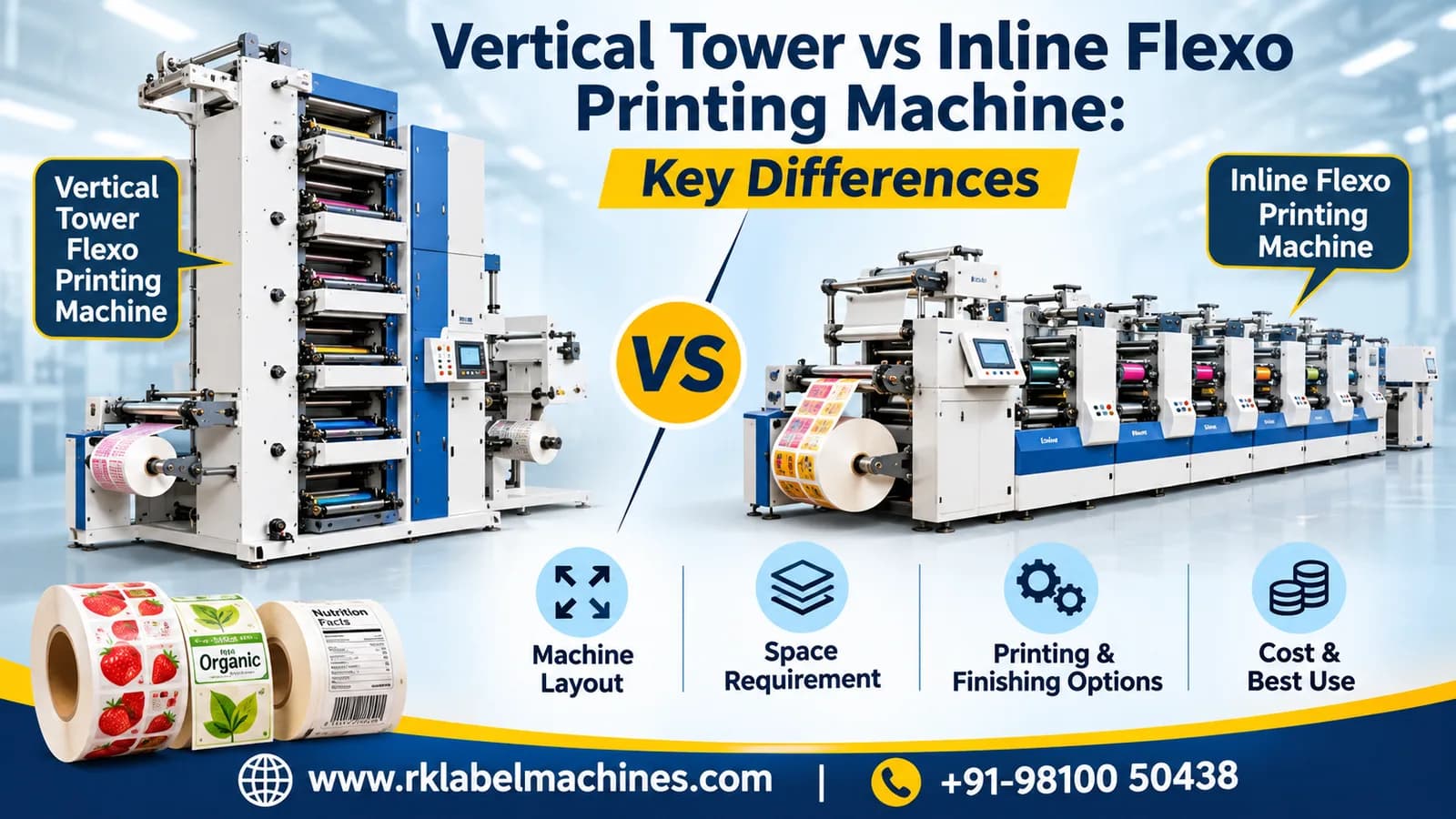
Choosing the right printing equipment can affect production costs, print quality, and delivery times. Label manufacturers need a machine that matches their available floor space, order volume, material types, and finishing requirements. Understanding the differences between vertical tower and inline flexo printing machines helps businesses make an informed purchasing decision.
A vertical flexo printing machine arranges its printing units vertically, creating a compact layout for multi-colour label production. An inline flexo press generally arranges printing units along a horizontal web path, often allowing operators to combine printing and finishing operations in one production line. Both designs can support commercial label manufacturing, but their layouts and configurations suit different production needs.
What Is a Vertical Tower Flexo Printing Machine?
A vertical tower flexo machine stacks its printing units vertically rather than placing them in a long horizontal line. The label material moves through the printing stations, where each unit applies a specific colour. Drying systems help prepare the printed material for the next stage.
For example, RK Label Machines offers the RK F 320/6 Colour model with six flexographic printing units, ceramic anilox rollers, IR hot-air drying, a UV dryer unit, rotary die cutting, lamination, and a turn bar for back-side printing. These features support several label production tasks within one machine configuration. View the manufacturer's specifications.
What Is an Inline Flexo Printing Machine?
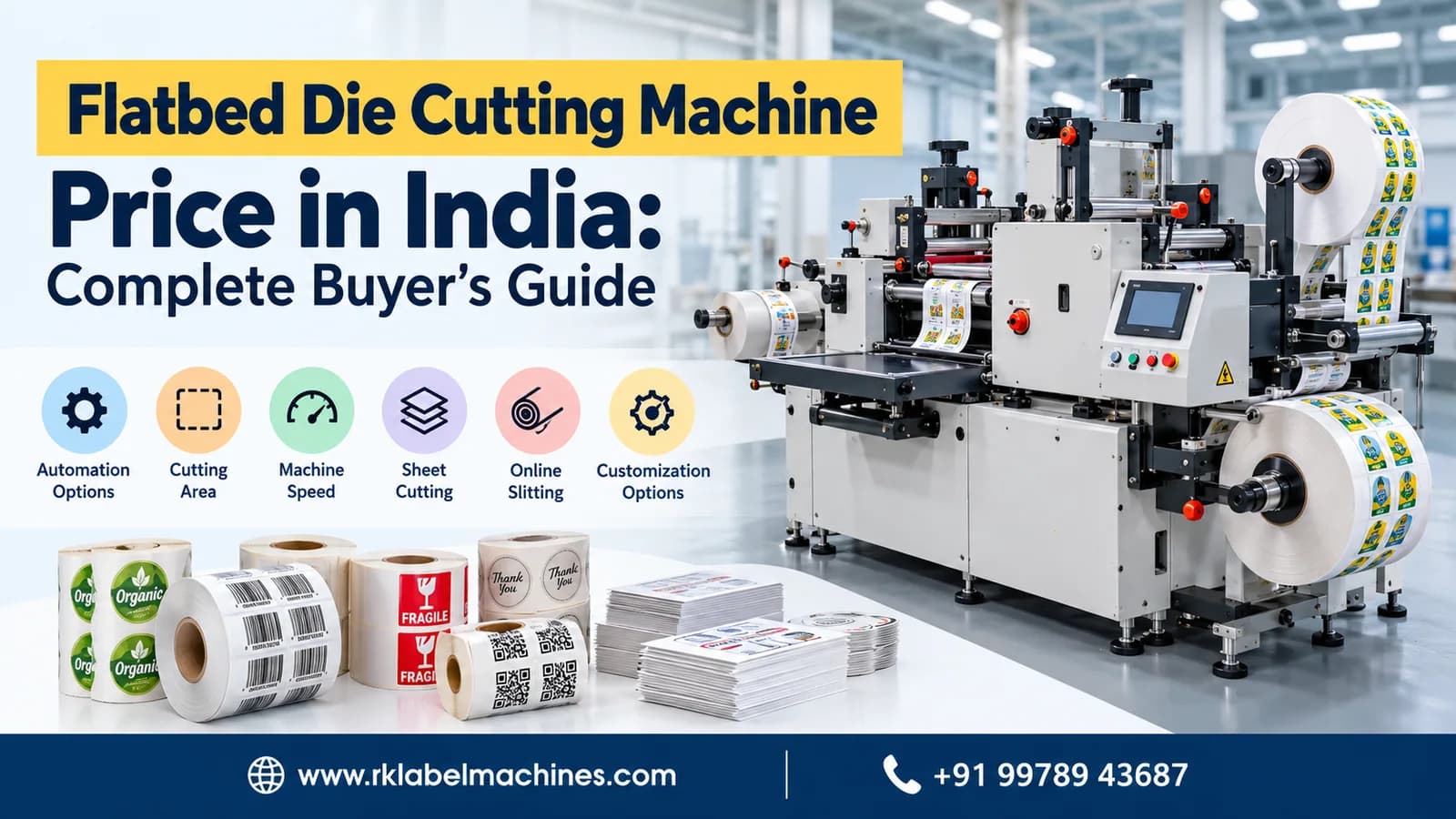
An inline flexo printing machine places its printing stations along a horizontal production path. Depending on its configuration, the press can combine printing with processes such as varnishing, lamination, die cutting, and rewinding.
Manufacturers often consider inline presses when they need a particular combination of production speed, web width, finishing stations, and automation. However, the exact capabilities depend on the model rather than the layout alone.
Vertical Tower vs Inline Flexo Printing Machine: Key Differences
| Comparison Factor | Vertical Tower Flexo | Inline Flexo |
|---|---|---|
| Machine layout | Printing units stacked vertically | Printing units arranged horizontally |
| Floor space | Often reduces machine length | May require a longer installation area |
| Multi-colour printing | Supports multiple printing units | Supports multiple printing units |
| Drying system | Depends on the selected configuration | Depends on the selected configuration |
| Finishing options | Can include inline die cutting and lamination | Can include inline die cutting and lamination |
| Best selection criteria | Available space and label requirements | Production layout and process requirements |
Neither design automatically delivers better print quality or higher output. Actual performance depends on machine engineering, operator skill, substrate, ink, drying capacity, and job specifications.
Which Machine Is Better for Your Label Manufacturing Business?
Choose a Vertical Tower Machine When Space Matters
A tower configuration can suit businesses that want multi-colour printing without installing a long horizontal press. It may also help manufacturers bring label production in-house when their factory layout limits available floor space.
Before purchasing, check the machine's height, maintenance access, reel-loading arrangements, and required electrical supply. A compact footprint does not eliminate the need for safe operator access.
Consider an Inline Flexo Press for Your Production Workflow
An inline press may suit businesses that need a specific sequence of printing, coating, converting, or inspection operations. Compare the complete production line rather than the number of stations alone.
Ask manufacturers to demonstrate the intended workflow using your label design and material. This helps you assess registration, waste, changeover time, and finished-product quality.
What Should You Check Before Buying?
Before requesting a quotation, review these five factors:
- Printing requirements: Confirm the number of colours, print width, repeat length, and registration needs.
- Material compatibility: Check whether the machine supports your actual paper, self-adhesive stock, or film substrate.
- Drying technology: Match the drying or curing system to your inks, materials, and production speed.
- Finishing requirements: Identify whether you need die cutting, lamination, back-side printing, or other converting options.
- Total ownership cost: Compare the machine price, installation, training, energy use, maintenance, consumables, and expected production output.
These checks help you compare machines on practical business requirements instead of purchase price alone.
Get a Printing Machine That Fits Your Production Needs
Choosing the right equipment starts with understanding your current production challenges and future business goals. Explore the Vertical Tower Label Printing Machine from RK Label Machines to review its technical specifications, available configurations, and finishing options. Contact the manufacturer to discuss your label requirements and request a customised quotation before making your investment.