Packaging manufacturers need accurate cutting, consistent material feeding, and reliable production processes to meet customer requirements. The right machinery can help businesses manage converting operations, improve workflow, and maintain consistent output quality.
A Wad machine helps manufacturers process suitable roll-fed materials through controlled feeding and die-cutting operations. Before choosing a machine, businesses should understand its working process, material compatibility, production capacity, cutting area, automation features, and maintenance needs. These factors help buyers select equipment that matches their production goals rather than focusing on speed alone.
What Is an Induction Wad Punching Machine?
An induction wad punching machine uses a punching or die-cutting mechanism to cut suitable materials into the required shapes and sizes. Depending on the machine configuration and tooling, manufacturers can use this type of equipment to produce components for packaging applications.
Induction sealing wads often contain multiple layers, which may include aluminium foil and a heat-seal coating. These materials require suitable processing equipment and compatible tooling to achieve the intended shape and quality.
It is important to understand the difference between wad punching and induction sealing. A punching machine cuts the material into the required shape, while an induction sealing machine uses electromagnetic heating to bond a compatible sealing layer to a container. These are separate manufacturing processes.
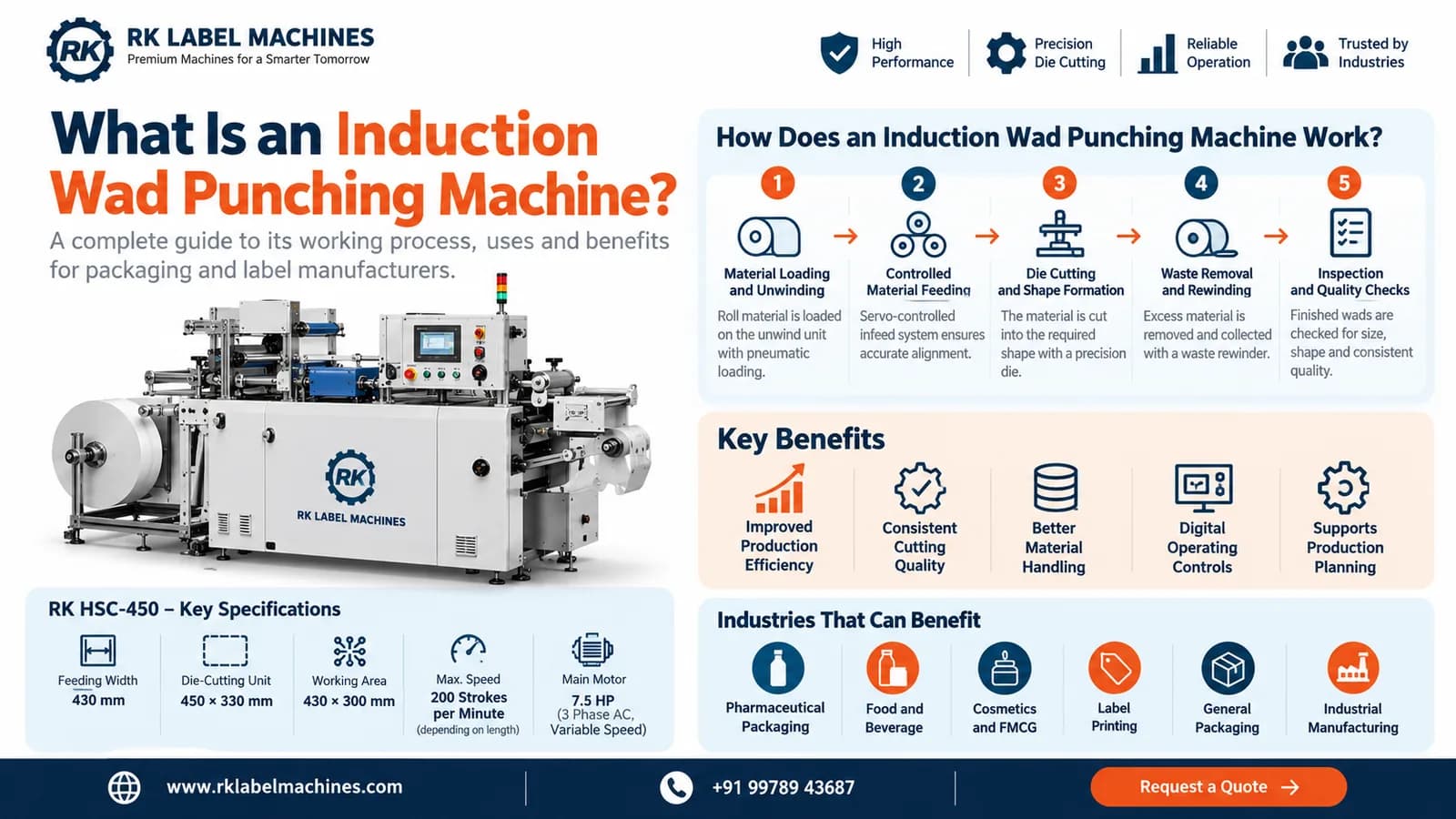
How Does an Induction Wad Punching Machine Work?
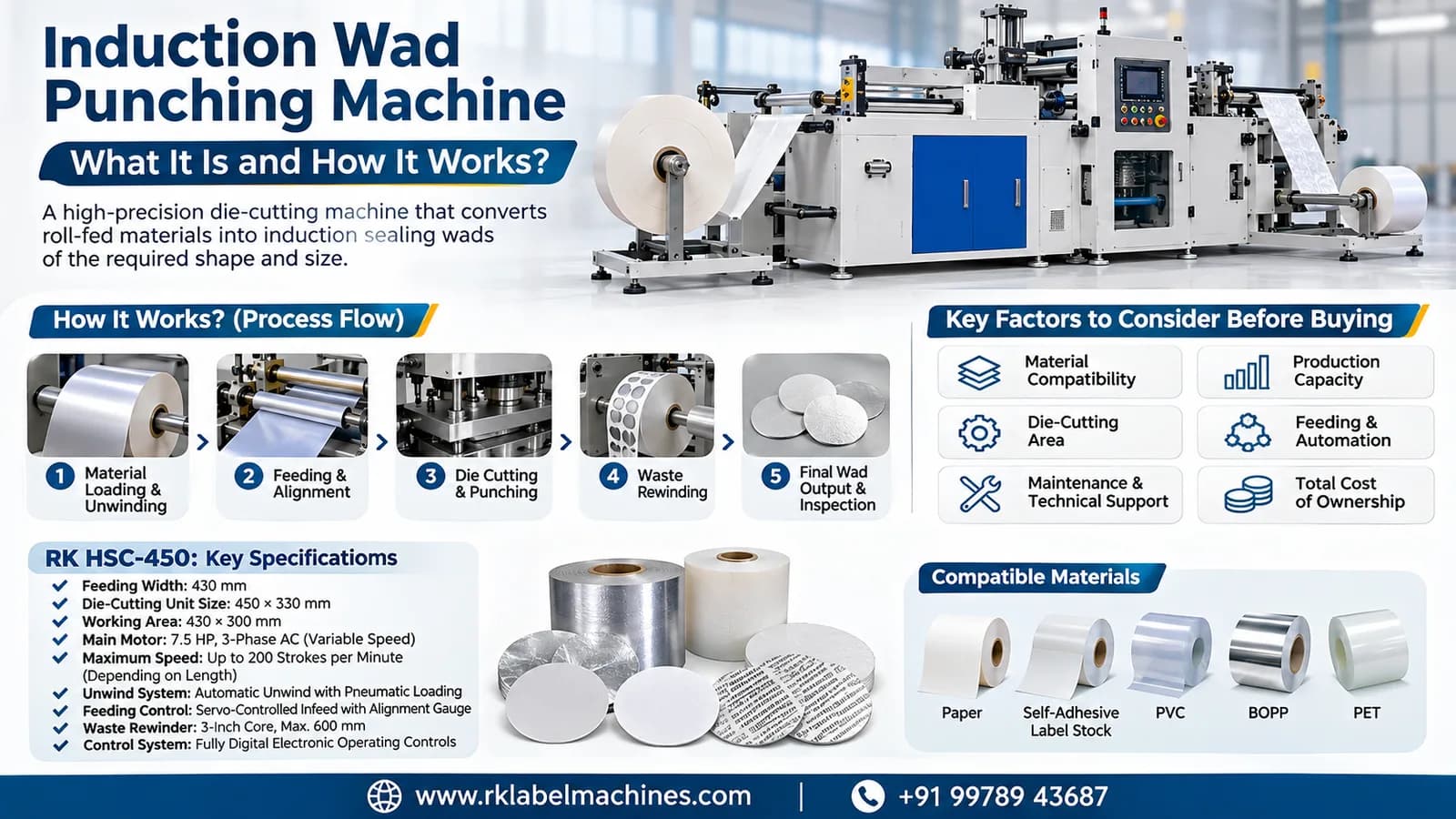
The machine follows a series of controlled steps. The exact process depends on the material, machine design, tooling, and production requirements.
1. Material Loading and Unwinding
The operator loads the material roll onto the unwind unit. The machine feeds the material towards the cutting section as the production process begins.
An automatic unwind system can simplify roll handling. Pneumatic loading features may also help operators position suitable rolls, depending on the machine configuration.
2. Material Feeding and Alignment
The feeding system moves the material through the machine. Correct alignment helps maintain consistent positioning during cutting.
Some machines use servo-controlled feeding and alignment guides to control material movement. Operators should check web tension, roll positioning, and material tracking before starting production.
3. Die Cutting and Punching
The cutting unit uses a suitable die to cut the material into the required shape. The selected die must match the intended dimensions and the material's processing requirements.
Cutting quality depends on several factors, including die condition, material thickness, feeding accuracy, cutting pressure, and machine settings. A production trial can help verify whether the selected setup meets the required tolerances.
4. Base Material Separation and Rewinding
In compatible roll-to-roll converting setups, the machine separates the processed material from its backing or base paper where the configuration supports that operation. A waste rewinder can collect waste material and help maintain a more organised workflow.
Operators should inspect the finished output for incomplete cuts, unwanted material damage, dimensional variation, and other visible defects.
5. Quality Inspection
The final stage involves checking the cut pieces against the approved specifications. Manufacturers should inspect sample output, confirm dimensions, and verify that the material suits the next production stage.
For packaging applications, additional testing may be necessary to confirm sealing performance. Punching quality alone does not prove that a finished induction wad will form a reliable seal on a container.
Key Factors to Consider Before Buying a Wad Punching Machine
Choosing the right equipment requires more than comparing advertised speeds. Review the following factors before requesting a quotation.
1. Material Compatibility
Identify the exact substrate you want to process. Paper, self-adhesive label stock, PVC, BOPP, PET, and specialised laminated materials have different processing requirements.
Ask the manufacturer to confirm compatibility with your actual material structure, thickness, width, and intended application. Do not assume that a machine can process every type of induction sealing laminate without testing.
2. Production Capacity
Estimate your daily or monthly production target before selecting a machine. Check the rated stroke speed, cutting length, setup time, operator requirements, and expected downtime.
A higher stroke rate does not automatically guarantee more finished pieces. Actual output depends on the die layout, material dimensions, machine settings, and production conditions.
3. Die-Cutting Area
Check both the machine's overall die-cutting unit dimensions and its usable working area. Your required material width and cutting layout must fit within the available area.
Also ask about tooling availability, die changeover time, and the dimensional accuracy the machine can achieve with your selected material.
4. Feeding and Automation
Review the unwind system, feeding mechanism, alignment controls, outfeed rollers, and waste collection arrangements.
Automation may reduce manual handling and support a more consistent workflow. However, the benefits depend on the actual configuration, operator training, and maintenance practices.
5. Maintenance and Technical Support
Ask about routine inspection, lubrication requirements, spare parts, troubleshooting, and service availability. A clear maintenance schedule helps manufacturers plan production and reduce unexpected interruptions.
6. Installation and Floor Space
Confirm the machine footprint, electrical supply, access for material loading, operator clearance, and space for auxiliary equipment. Request a dimensioned layout drawing before finalising the installation area.
7. Total Cost of Ownership
Compare the quoted price with tooling costs, installation, training, spare parts, maintenance, energy use, and expected material waste. A suitable machine should meet your operational requirements and provide a practical long-term investment.
RK HSC-450 Induction Wad Punching Machine: Features and Specifications
RK Label Machines lists the RK HSC-450 with a heavy-duty die-cutting unit on its official product page. The published specifications include:
- Feeding width: 430 mm.
- Die-cutting unit size: 450 × 330 mm.
- Working area: 430 × 300 mm.
- Main motor: 7.5 HP, three-phase AC motor with variable-speed control.
- Maximum rated speed: Up to 200 strokes per minute, depending on length.
- Unwind system: Automatic unwind unit with pneumatic loading.
- Feeding control: Servo-controlled infeed with a material alignment gauge.
- Waste management: Waste rewinder with a 3-inch core and a stated maximum of 600 mm.
- Control system: Fully digital electronic operating controls.
These specifications provide a useful starting point for comparing the machine with your production requirements. Actual output and material suitability depend on the selected setup and operating conditions. Confirm the latest specifications and application compatibility with RK Label Machines before purchasing.
Frequently Asked Questions
What does an induction wad punching machine do?
It cuts suitable roll-fed materials into specified shapes and dimensions using a punching or die-cutting mechanism. The exact application depends on the machine configuration, tooling, and material compatibility.
How does an induction wad punching machine work?
The machine unwinds and feeds the material, aligns it, cuts it with suitable tooling, and manages the processed material and waste according to its configuration. Operators then inspect the output for dimensional accuracy and cutting defects.
Is wad punching the same as induction sealing?
No. Wad punching shapes the material, while induction sealing uses electromagnetic heating to bond a compatible sealing layer to a container. Manufacturers may need separate equipment for these two operations.
Which materials can a wad punching machine process?
Material compatibility depends on the machine and tooling. RK lists paper, self-adhesive label stock, PVC, BOPP, PET, and other filmic materials on its product page. Confirm suitability for specialised multilayer sealing laminates before ordering.
What is the maximum speed of the RK HSC-450?
RK lists a maximum speed of 200 strokes per minute, depending on length. Actual production output may differ based on material, cutting layout, machine settings, and operating conditions.
How can I request a quotation for the RK HSC-450?
Contact RK Label Machines with your material specifications, required cut dimensions, production target, and application details. This information helps the team assess your requirements and recommend a suitable configuration.
Choose the Right Machine for Your Production Needs
Selecting an appropriate Induction wad making machine starts with understanding your material, required output, cutting dimensions, and quality standards. Compare the available specifications, request a material trial where possible, and confirm that the equipment supports your intended application.
Explore the RK Induction Wad Punching Machine to review its published specifications and discuss your requirements with the manufacturer.
Request a customised quotation:
- Company: RK Label Machinary Private Limited
- Phone: +91 99789 43687
- Email: info@rklabelmachines.com
Share your material type, target dimensions, and expected production volume to help the team assess your requirements.